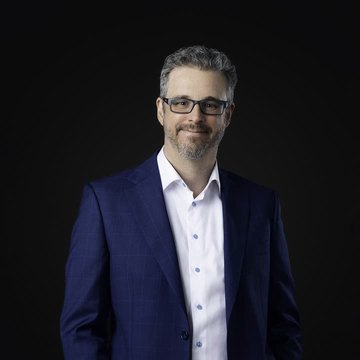
 EmceeMoe PoirierFounding PartnerShift FacilitationRead bio →
 EmceeJason LewisSenior PartnerShift FacilitationRead bio →
Plenary
Metropolitan Ballroom

I4PL 2026 · Igniting The Capability Era
Two days, four streams, and 36 speakers. Follow one stream all the way through or move between them as your own work demands.
The program as it stands today. Times and rooms can still shift as the final details are settled.
Not sure where a room is? Find your room in the hotel plans
EmceeMoe PoirierFounding PartnerShift FacilitationRead bio →EmceeJason LewisSenior PartnerShift FacilitationRead bio →Three-quarters of Canadians want to re-skill to manage changing job needs, yet 63% do not feel comfortable enough to show up as themselves at work. You know how to design great learning experiences and build capable teams. This keynote is about what the research says is getting in the way.
Choose one of 4
As workplaces evolve at an unprecedented pace, the skills employees need are shifting just as quickly. Traditional training models, built around teaching specific steps to complete specific tasks, are struggling to keep up. What organizations need now are learning programs that prepare employees not just to follow procedures, but to think critically, adapt, and solve problems in the moment.
A competency-based learning environment moves away from rigid, task-specific instruction and toward broader, transferable skills that employees can apply across a variety of situations.
Rather than asking “How do we train someone to do this task?”, competency-based design asks “What capabilities does this person need to perform, grow, and succeed?”
Using Friesen, Kaye and Associates’ proven Instructional Design Methodology as our framework, this session will guide you through the shift from traditional task-based training to a competency-based approach. You will explore practical strategies for designing learner-centred programs that go beyond knowledge transfer, programs that drive measurable performance improvement and deliver real business results.
Whether you are new to competency-based design or looking to refine your approach, this session will give you the tools to build learning that prepares employees for the workplace of today and tomorrow.
Most L&D teams measure memorization, not capability. And the assessment data we surface rarely earns the trust of the executives who fund our work. In an era where AI promises everything, our credibility depends on producing learning evidence that links directly to performance and business outcomes.
This session walks through how to redesign assessments to reveal authentic problem-solving capacity, scale personalization through AI, and connect learning data to organizational metrics that matter to leadership.
We’ll explore concrete assessment patterns that go beyond multiple choice: AI-customized question banks, adaptive pathways, pretesting that respects learner time, and reflection-as-data techniques powered by AI and xAPI.
Attendees leave with a framework they can apply immediately, alongside examples and prompts to start strengthening their assessment practice the same week.
This session aligns with the conference theme by repositioning assessment from compliance artifact to capability lever, equipping learning professionals to demonstrate measurable impact, build stakeholder trust, and elevate L&D’s strategic role in the AI era.
Conservative estimates indicate one in five people identify as neurodivergent. Forward-thinking organizations recognize the value of creating environments where this population can thrive and bring their unique perspectives, talents and abilities. Yet many leaders struggle to translate policies and good intentions into everyday behaviours that genuinely support neurodivergent employees.
In this session, explore your role as a Learning Enabler and how you have a critical role in bridging that gap.
Rather than focusing on diagnoses, accommodations, or compliance, this session examines how L&D professionals can design experiential learning to build awareness, empathy, and more thoughtful leadership responses in complex, real-world situations. Attendees will participate in a powerful simulation that illustrates how different environments can affect people in very different ways and then reflect on what this reveals about leadership assumptions, judgment and decision-making. Through guided reflection and discussion, attendees will explore how differences in thinking, processing, and experiencing work shape performance, communication, and inclusion, and why information alone is rarely enough to change behaviour.
This session offers practical insight into how L&D professionals and leaders can enable neuroinclusive leadership by shaping mindsets, supporting meaningful conversations, and creating the conditions for learning and empathy to take root across organizations.
We do not have a competency problem. We have a capability problem. Organizations have no shortage of frameworks, models, and training.
Yet the human skills they say matter most, like communication, judgment, accountability, collaboration, etc. still break down in the flow of work. Why? Because capability is not built by content alone.
It depends on whether trust, social-emotional conditions, manager behavior, workflow design, and reinforcement systems make those skills usable in real life. In this session, Shawna Cole challenges the idea that L&D's role ends with building competencies. Instead, she positions L&D as a strategic partner in designing the conditions for use that turn skill into capability.
Through a practical case study, table discussion, and a take-away worksheet, participants will learn how to define what success should look like, identify where capability is being lost, and pinpoint what learning, talent, and culture systems must do differently to support it. This session is for learning professionals who want to move beyond content delivery and build human skills by design.
Additional registration required: $100 per person.
Some of the most important progress on change happens not through more strategy, but through honest conversation about the parts of change that make us uncomfortable. We will explore uncomfortable, sometimes counter-intuitive situations around leading change, the kind most leaders have lived through but rarely talk about openly. Take this example: an executive introduced a major change and focused heavily on trying to win over the resistors.
The resistance grew anyway. How is that possible? Dr. Weiss shares several propositions like this one, drawn from his research and his work with organizations navigating transformation, and the group dialogues about them together.
The question is not whether an idea sounds right. It is whether it matches what you have actually experienced, and how it might need to evolve to better reflect how change really happens.
Your facilitatorDr. David Weiss translates research into real-world insight, tested and refined through direct dialogue with executives, drawing insight out of the room rather than simply presenting it. He is President and CEO of Weiss International Ltd., where he leads a team of coaches and consultants working on innovative thinking, leading change and executive coaching. He has facilitated over 1,000 projects on five continents, shaping his research and several of his seven books. David is a Ph.D. organizational psychologist, a Professional Certified Coach (PCC), and affiliate faculty at two universities. www.weissinternational.ca
Choose one of 4
The Yellow Brick Road stretches ahead, inviting you to transform ordinary training into impactful, extraordinary learning experiences. This isn’t just any road, it leads to the Hall of Unlocking Employee Potential, a destination where talent development professionals “level up” employees through gamified learning approaches that promote development, strengthen engagement, and unlock meaningful change. As you travel this road, you’ll learn about brain-based gamification design purposefully crafted to transcend entertainment and deliver impactful and well-designed learning experiences.
You’ll learn to integrate narrative, identify motivators, and craft experiences that spark curiosity and action, driving real behavior change. Every step forward builds on your unique expertise, helping you create a customized roadmap for leveling up the training programs you oversee. Bring an idea or program you’re ready to transform and prepare to embark on an immersive journey of discovery.
Together, we’ll follow the Yellow Brick Road to the Hall of Unlocking Employee Potential, where creativity, strategy, and innovation converge to empower our workforce.
Organizations are sitting on a hidden goldmine of expertise. Yet many still struggle to translate that expertise into consistent capability across teams and roles. Valuable knowledge often remains informal, siloed, or dependent on a few experienced individuals, while L&D teams face increasing pressure to build capability at scale.
This session explores how SME enablement can help bridge that gap.
Participants will be introduced to a practical approach for helping Subject Matter Experts contribute to learning in structured and sustainable ways without turning them into full-time trainers. The session focuses on identifying meaningful learning moments within everyday work and creating opportunities for capability-building where work actually happens. Through guided reflection and a short hands-on exercise, participants will explore how to uncover expertise, identify capability-building opportunities, and support more work-embedded learning practices.
The goal is not to build a complete SME program in 60 minutes, but to leave participants with a clearer lens and one practical framework they can apply within their own organizations.
 ModeratorTisha Parker KempFounder and PrincipalshiftED AcademyRead bio →
 PanellistBruce MayhewPresidentBruce Mayhew Consulting (BMC)Read bio →
 PanellistJesmine SinghWorkplace Wellness StrategistRead bio →
Working effectively with people whose experiences differ from our own is becoming one of the most important skills in today’s workplace. This panel explores how trust, learning, and collaboration can thrive across generations, career stages, and professional experiences. Panellists will share insights on mentorship in both directions, challenging assumptions, navigating diverse career paths, and creating environments where institutional wisdom and fresh perspectives can coexist.
Rather than placing people into generational boxes, we’ll explore how curiosity, respect, and intentional relationship-building help us learn from one another and work better together. Participants will leave with practical ideas for strengthening cross-generational relationships, fostering mutual learning, and building confidence when working with people whose experiences and perspectives differ from their own.
Job descriptions describe the workforce you needed before AI rewrote the rules of work. They are static documents in a dynamic environment, and organizations that keep hiring, developing, and deploying people against them are already falling behind. The shift from role-based to skills-based thinking is not an HR project.
It is a fundamental redesign of how organizations see, develop, and deploy human capability, and L&D is positioned to lead it. AI is accelerating the obsolescence of role-based models faster than most organizations can respond. The skills AI cannot replicate are precisely the ones most job descriptions fail to capture.
That is the burning platform. This session is the response. Attendees work through a practical competency mapping process applied to their own organizational context.
They leave with a completed artifact, a usable framework, and a clear first step toward building capability architecture that holds up in an AI-accelerated world.
Choose one of 4
 SpeakerArman KhakiSenior Instructional DesignerCanadian North AirlinesRead bio →
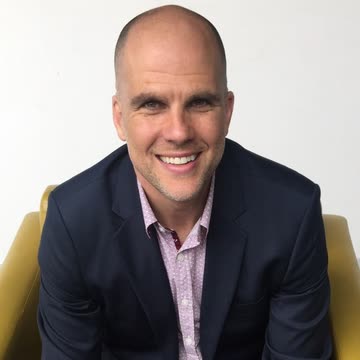 SpeakerPhilippe DesrochersTraining ManagerCanadian NorthRead bio →
Most L&D teams have now bolted AI onto their courses. Few have built courses that genuinely adapt. This session shows how Canadian North Airlines bridged that gap, engineering a fully working intelligent adaptive learning experience inside Articulate Storyline.
You’ll see the method behind the curtain: how an analytic rubric, a structured prompt, and a Gemini API call can turn a static Storyline interaction into a self-correcting loop that evaluates each learner’s response, decides what they need next, and delivers it on the spot. We’ll start with the deployed Canadian North case study (the AVOP Practice Test), move into the design method, and finish with a live look at the prompt-building tool and the Storyline template you’ll take home. This isn’t a generic AI demo.
It’s a working system, used in production, broken down so you can rebuild it. Every attendee leaves with the template, the tool, and a clear understanding of every design decision behind them. Arman Khaki and Philippe Desrochers frame the session in both technical and strategic terms, so the room takes home both the how and the why.
 SpeakerRashmi BiswasCo-OwnerLake and AssociatesRead bio →
 SpeakerPerri TermineDirector of ResearchLake and AssociatesRead bio →
Nonprofit leaders are navigating unprecedented complexity: technological disruption, shifting workforce expectations, funding volatility, and rising community needs. In this environment, learning that informs is not enough. What differentiates resilient, high-performing organizations is leadership capability: the ability to adapt, decide, collaborate, and build trust under real-world pressure.
This 60-minute interactive workshop introduces a research-based leadership framework, the Performance Pendulum™, designed for the nonprofit sector and grounded in the leadership requirements, competencies, and behaviours that underpin effective executive performance.
Participants will apply the framework in real time through scenario-based collaboration and rapid capability mapping, translating leadership requirements into applied performance that holds up under complexity.
The session positions L&D professionals as strategic partners who can architect leadership systems that reduce organizational risk, strengthen culture, and accelerate transformation. Participants will leave with practical tools to embed competency and capability development into coaching, leadership pipelines, and organizational learning strategies, enabling their organizations to support executive performance that is measurable, sustainable, and aligned with mission impact.
 SpeakerDavid ChandrossInterprofessional EducatorPallium Canada and Ontario Tech UniversityRead bio →
The goal of this session is to teach participants how to build experiential online learning based in fantasy worlds with a deep narrative related to purpose and meaning in life. The tools we will show are based on a suite of AI products and simple code creation embedded in the LMS Rise or any number of platforms. Imagine a journey around the globe starting in the Wu Dang mountains of China, then through Japan, then Africa, then Sweden, learning your KSAs along the way.
Now imagine that the story this is based on is derived from studies in mythology, ancient history and adventure, taking you across time and space. Now imagine creating this in a week with realistic graphics, a musical score, narration by actors and embedded multi-layered feedback loops to emulate problem-based learning for solo online learning. We will show you how to develop compassionate connectedness design in your narrative to go far beyond simple stories.
How might you have students leaving with a sense of meaning and purpose in their work that transcends job descriptions and aids them in self discovery. This is learning, reborn. Connection, meaning and hope.
What are the one-of-a-kind, truly unique gifts that you have to offer as a facilitator? What’s the “human” imprint you leave behind with every group of learners that you meet? Naming your strengths is affirming.
Recognizing your signature style is empowering. In this interactive session, explore how the uniquely human gifts that you have to offer don’t just inform, but transform the impact you have in the training room. Together we’ll examine how Personas can be used as a coaching tool to help you accelerate the strengths discovery process.
You’ll leave with a deeper sense of purpose in your work as a trainer, provocative ideas for re-imagining train-the-trainer programs, and practical tips to apply right away in your next delivery.
Choose one of 4
We’re constantly being told AI will revolutionize the way we all work, but can you imagine ever not using PowerPoint? It feels too embedded to be cast aside. Fortunately, Microsoft, and others, have incorporated AI tools into PowerPoint, and it’s always being updated with new capabilities, while still using familiar tools.
Microsoft Copilot will be a huge boost to storytelling, design, and visualization for many, enabling them to create better presentations much more quickly and easily. It’s the most exciting thing to happen to PowerPoint, and Office, since it was launched 30 years ago. But there are other, more subtle, but equally useful AI tools that can help.
From creating custom graphics and layouts, to finding suitable content, to incorporating webcams into your slides. Plenty to cover that will be highly relevant to people in an L&D environment who probably dream in PowerPoint.
In the “Capability Era”, learning must move beyond information delivery to true organizational transformation. However, transformation is inherently messy. Today’s L&D professionals often face “EQ Debt”, the accumulated mistrust and change fatigue of a shifting workforce.
When participants become resistant or “hostile”, our instinct is often to de-escalate or “park” the comment. This session argues that doing so kills trust and misses critical organizational data. Drawing on a unique blend of legal cross-examination logic and organizational coaching, this session introduces the concept of “Conflict Alchemy”.
We move past generic engagement tips to teach facilitators how to treat resistance as a “Lead Witness” for systemic gaps. Attendees will engage in a high-intensity “Heat Map” roleplay and leave with a practical toolkit to safely navigate friction, transform outbursts into strategic insights, and build the unshakeable trust required for real organizational capability. It is time to move past polite silence and toward strategic candour.
Most training delivers knowledge, but that doesn’t mean people can actually perform better at work. Too often, programs focus on engagement, content, quizzes, and making learning “fun”, while cutting the very elements that drive behavior change.
In this high-energy, no-lecture session, we’ll unpack five common mistakes that quietly weaken learning impact and explore the design choices that truly influence performance. Through real-world before-and-after examples, you’ll see how shifting from content-heavy approaches to performance-focused techniques changes outcomes.
This session is experiential.
You’ll analyze examples, challenge assumptions, and reflect on where these pitfalls show up in your own programs. You’ll gain practical strategies to strengthen learning transfer and ensure training supports real work, not just participation.
 ModeratorDr. Robin YapChief Executive and Learning Innovation OfficerPoint NorthRead bio →
 PanellistKate BowersFacilitation and Learning Design Co-FounderAction/InsightRead bio →
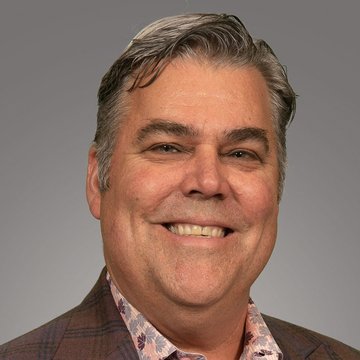 PanellistCorey GillProfessor and Program Coordinator, Human ResourcesDurham CollegeRead bio →
 PanellistOlga NovikovaFounderNovaShift Advisory Inc.Read bio →
AI is reshaping how L&D and OD professionals work and the fear surrounding that shift is both real and understandable. Much of the anxiety comes from the belief that AI will “take over the world” not through science-fiction sentience but through rapid acceleration, concentrated power, and the risk that organizations adopt AI faster than they can govern it. When systems evolve without shared guardrails, humans can lose agency in subtle but significant ways.
This panel acknowledges those fears and moves beyond them. Together, we’ll explore how AI is already transforming day-to-day work, what it means for mindset and culture within teams and organizations, and where the gaps are in preparing people to use AI responsibly and confidently. This isn’t a tools demo.
It’s an open, candid discussion with audience interaction. Our panellists bring diverse experiences and grounded perspectives on what has worked, what hasn’t, and what’s emerging. They’ll speak about the cultural, ethical, and practical realities of integrating AI into organizational life and how we can shape a future where humans remain at the centre of learning, development, and decision-making.
EmceeMoe PoirierFounding PartnerShift FacilitationRead bio →EmceeJason LewisSenior PartnerShift FacilitationRead bio →We are entering a Capability Era. But capability without behaviour change is just information. Three forces are converging on L&D: AI-generated content has commoditized what we teach; AI avatars and digital coaches are commoditizing how we deliver; and executive expectations for measurable impact have never been higher.
The role of support function is fading. The role of trusted strategic partner, credible, agile and evidence-led, is open. This keynote draws on six years of behaviour-change data from 112,286 participants across 1,735 organizations and twenty countries to show what separates programs that transform organizations from programs that only inform.
The pattern is clear: practitioners who treat behaviour change as the design constraint, not a wishful outcome, generate 35% more program adoption, 66% greater follow-through, and 21% greater measurable impact than those who don’t. Attendees will leave with a clear thesis on where the industry is heading, the specific levers that determine whether learning sticks, and a defensible position for their own work in the AI-disrupted future of L&D.
Choose one of 4
Although many organizations mark eLearning as a success once it meets accessibility standards, neurodivergent learners often continue to face challenges with usability, navigation, and meaningful learning. True inclusivity requires moving beyond compliance to thoughtful design that genuinely supports diverse needs. This session explores how common eLearning design practices can unintentionally create barriers for neurodivergent learners.
It draws on emerging research in instructional design and cognitive load theory, which shows that poorly designed digital learning environments can increase cognitive effort and reduce learning effectiveness, particularly for learners with diverse cognitive profiles. Using authentic corporate examples, attendees will identify where digital learning experiences break down and explore how small design decisions can affect engagement, comprehension, confidence, and performance. Attendees will leave with practical ideas for creating more flexible and cognitively accessible learning experiences that support different ways of processing information while improving learner success across the organization.
Most L&D professionals know the Ebbinghaus Curve: people forget quickly when learning is not reinforced. Yet many organizations still evaluate training as if the event is the outcome. This session challenges that habit.
Drawing on practical field experience and long-term research into what makes development stick, we will examine why high-engagement programs can still fail to create measurable change and what to do instead. Participants will explore a simple transfer-focused model built around relevance, repeatability, direct-manager support, and evidence of behaviour change. Instead of asking, did participants like it, we will ask better questions: was the learning relevant, was it reinforced, did managers support application, did behaviour change after the session?
Through table activities and a redesign challenge, participants will take a familiar learning program and identify where forgetting, friction, and lack of support are likely to break the transfer chain. They will leave with a practical checklist for designing learning that survives Monday morning.
While the L&D world races toward AI-powered solutions, we have overlooked a certain technology that has been perfecting human skill development for decades. Video games. This session challenges the assumption that games are a distraction from serious learning.
Using the Rift Method, a practical, research-backed framework developed over eight years of applied practice, attendees will discover how off-the-shelf video games create the conditions essential skills training has always needed: authentic pressure, low stakes, engagement, and cyclical practice. This is not a lecture. Attendees will experience it firsthand.
A live demonstration using one of my favourite video games will surface real communication gaps in real time, with a panel of subject matter experts diagnosing what they see. Then we will reverse-engineer the entire experience using the Rift Method, revealing exactly how the session was designed. Skill first, dynamics second, mechanics third, equipment last.
Delegates will leave with a replicable framework they can apply Monday morning. No specialized equipment, no gaming expertise required.
Stop saying I will do it next year. You have spent years building incredible L&D projects, but in a world of new technology advancements at every corner, how do you actually prove your worth and showcase the skills you spent years developing? Most portfolios stay stuck in a to-do list because the tech feels overwhelming.
Not anymore. Bring your laptop, or just a notebook, and join this high-energy, choose your own adventure workshop where we turn your hard work into a professional digital brand, live in the session. No coding experience required.
This hands-on tutorial is for all L&D professionals. Pick one of the tracks and let us get started. The Speedster: build a site in minutes using prompts.
The Creative: customize sleek templates with intelligent widgets. The Architect: learn to code custom details without actually knowing code. We are moving beyond boring screenshots.
You will learn to create professional mock-ups that make your work pop. You will walk out with the templates, the tools and renewed confidence about your work in the Capability Era. One hour. No more excuses.
Additional registration required: $100 per person.
Every organization in this room has made significant investments in capability building. And in most of them, something invisible is quietly undermining the return. Not the platform.
Not the content. Not the design. This session names what the industry has not, and backs it with over 600,000 participants across a portfolio of more than $2M in federally funded studies.
It introduces a new leadership framework that redefines what it means to build capability in the Capability Era: one that elevates trust, restores performance, and positions the L&D professional as the most strategically essential person in the room. Expect to be challenged. Expect to see your organization differently.
And expect to leave with a concrete commitment you can act on Monday morning. This is not a wellness conversation. This is a performance conversation.
Because the organizations that will win the Capability Era are not the ones with the best technology. They are the ones whose leaders understand what is actually standing between their people and peak performance.
Choose one of 4
We are asking leaders and employees to learn faster, adapt quicker, and perform under constant pressure. Yet many learning environments still lack the one capability that makes transformation possible: psychological safety. In this highly interactive session, participants will explore why traditional learning design falls short when people do not feel safe enough to speak, challenge, or try.
Drawing on real-world leadership and team development work, this session reframes psychological safety not as a nice to have, but as a core capability that directly impacts learning transfer, behaviour change, and performance. Participants will experience simple, practical tools to shift from performative learning environments to spaces where real learning happens. Through live activities, peer discussion, and applied reflection, they will leave with tangible strategies to build safety, increase participation, and unlock honest dialogue in their own learning programs.
Because when people feel safe enough to speak, they become capable of learning, adapting, and leading in entirely different ways.
More than ever, organizations need to prioritize capability building, but there is a barrier that is not getting enough attention. People cannot build capability without capacity, and we are facing a capacity crisis. Workloads continue to rise, attention is increasingly fragmented, and many people are struggling to find the capacity to learn, adapt and apply new skills.
Enter artificial intelligence, arguably the most powerful productivity tool we have ever seen. It promises to help us save time, reduce friction, improve quality and create more space for capability building and other higher-value work. But that promise is not guaranteed.
We are learning that time savings do not automatically become real capacity. In many organizations those savings are quickly absorbed back into meetings, messages, reactive work and rising expectations. In this interactive session, Doug Heidebrecht will explore how learning and development can help turn that promise into the capacity people need to build capability, both for ourselves and for the teams and organizations we support.
The session examines a practical, human-first approach that combines intentional work habits, better capacity conversations and smart use of the tools.
 SpeakerTracelle PalmerDirector, Learning TechnologyPublic Services Health and Safety AssociationRead bio →
 SpeakerChelsea KerrChief Product OfficerAllDayTARead bio →
Most organizations are asking whether artificial intelligence belongs in the training room. PSHSA already answered that question and deployed it. In this session, Tracelle Palmer of PSHSA and Chelsea Kerr, Chief Product Officer of AllDayTA, share a candid, practitioner-led case study of integrating a purpose-built learning assistant into Health and Safety for Leaders, a mandatory, two-day instructor-led course for supervisors across Ontario’s public sector.
You will hear how the supported activities were designed and embedded, how facilitators were prepared, how learners were oriented, and what early delivery data is revealing. You will also see AllDayTA in action, answering the kinds of questions supervisors actually ask about their OHSA obligations. The session moves between short case study segments, a live demonstration, facilitated discussion, and a peer application activity where attendees identify where this approach could work in their own context.
You will leave with a reusable instructional strategy workflow, an operational readiness checklist, and a framework for evaluating enhanced learning in your organization.
Learning does not have to be complex to be impactful. This session introduces Knowledge Cafés, fast, simple learning conversations that connect employees directly with expertise, without heavy design or preparation. In a time when L&D professionals are asked to deliver more with less, this approach offers a practical, scalable way to build capability and trust through social learning.
This session models the approach it teaches. Participants will experience a Knowledge Café firsthand, engaging in table-based conversation before stepping back to reflect on why it works. Through guided discussion and pulling back the curtain, participants will explore how intentional design choices, such as powerful questions, simple structure, and participant interaction, drive engagement and learning transfer.
Participants will apply the approach by drafting their own Knowledge Café using a one-page planning tool and sharing ideas with peers. They will leave energized and equipped to run simple, high-impact learning experiences that support knowledge sharing, capability-building, and connection in their own organizations.
Sharpen your instructional edge.
Craft still decides whether learning lands. This stream goes deep on the practice itself: instructional design that respects how people actually learn, facilitation that holds a difficult room, accessible and inclusive design as a default rather than a retrofit, and evaluation you can stand behind. Directly relevant to CTDP and CTP certification holders maintaining their professional practice.
Build systems, not just sessions.
Most learning functions are still organised around delivery. This stream is for the people rebuilding them around capability: skills architecture, workforce planning that survives a reorganisation, and measurement a CFO will actually read. You leave with the structural questions worth asking when you get back to your own organisation.
Lead the shift. Do not just react to it.
Intelligent tooling has moved from pilot to payroll, and the honest questions are no longer technical. What work is genuinely changing? Which skills gained value overnight, and which quietly lost it? How do you retrain a workforce without pretending the disruption is smaller than it is? For practitioners who need a defensible position, not a keynote.
Learning that works for every generation in the room.
Five working generations, one learning strategy, and a great deal of lazy generalisation in between. This stream looks at what the evidence actually supports: inclusion and neurodiversity as design inputs, knowledge transfer before retirement takes it, early-career development that does not condescend, and mentorship that runs in both directions.
Make Monday different
Two days for practical learning, genuine connection, and the work that moves capability forward.
Registration is open. Registration and payment are handled directly through I4PL.